

Cyanotype Photography – why is it so captivating
Photography is often associated with capturing a moment — freezing time with a camera and preserving a glimpse of the world as we see it.
Cyanotype offers a different way of thinking about photography.
Instead of looking through a viewfinder, we work directly with materials. Instead of pressing a shutter, we arrange, compose and wait. Instead of receiving an instant image, we witness it slowly emerge through UV/sunlight exposure and water.
Cyanotype sits somewhere between photography, drawing, printmaking and natural science. It is a process where the artist collaborates with light, chemistry and chance.
This is what makes it so unique.
Photography without a camera
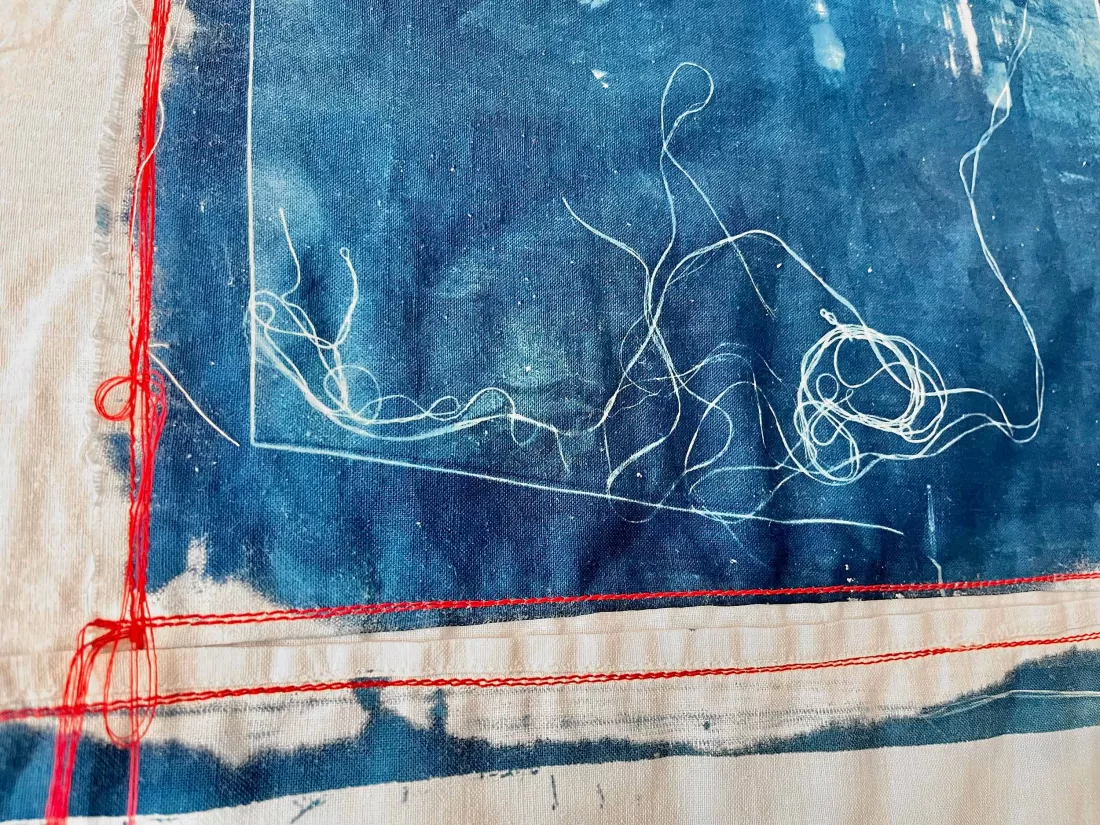
The most common question in my studio is: what camera do you need for cyanotypes? Well, one of the most fascinating things about cyanotype is that you do not need a camera to create a cyanotype photogram.
Traditional photography relies on a camera to capture reflected light from the world. Cyanotype works differently. Objects themselves become the image-making tool.
A flower, a leaf, a piece of lace, a handwritten note or a family photograph can all become part of a cyanotype composition.
The object is placed directly onto the prepared surface, creating a contact print. Where the object blocks the sunlight, the surface remains lighter. Where the light reaches the paper or fabric, the beautiful blue pigment appears.
The result is an image created through presence and absence — what was exposed to light and what was protected from it.
There is something very magical about this.
The object leaves behind a trace of itself.
The beauty of imperfection
Modern photography often encourages precision. We can adjust exposure, correct colours, remove imperfections and create hundreds of versions of the same image. As a trained photographer, I get that.
Cyanotype works differently.
The process has its own rhythm and personality. Sunlight changes throughout the day. Clouds move across the sky. Humidity affects drying times. Paper absorbs the solution differently. The same image can develop in unexpected ways.
These variations are not mistakes. They are part of the artwork.
Every cyanotype contains evidence of the moment it was made.
A print created on a bright summer afternoon will carry different qualities from one exposed on an overcast winter day. The blue will be slightly different. The process records not only the subject but also the environment surrounding it.
The weather becomes a collaborator.
A slower way of making images
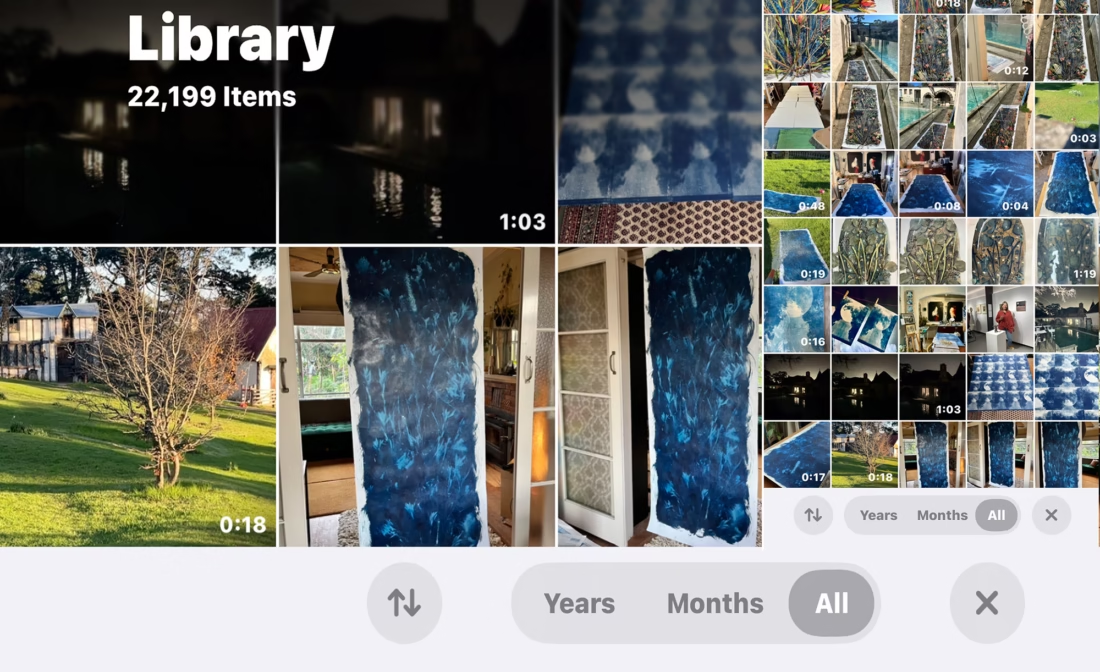 We live in a world of instant photographs.
Our phones allow us to capture, edit and share images within seconds. Most of us never look through the several thousands of images we keep on our smartphones. It can become overwhelming for many people. While this accessibility is wonderful, cyanotype offers something different: time.
The process asks us to slow down.
Preparing the paper, arranging materials, calculating exposure time, washing the print and waiting for the image to reveal itself all require attention and patience.
There is anticipation in watching the blue begin to appear.
The moment when a faint image slowly emerges from the paper feels almost like discovering something that was already there, waiting to be revealed.
This slower pace creates a different relationship with photography. The image is not simply captured — it is made.
The connection between photography and touch
Photography has traditionally been considered a visual medium. Cyanotype brings touch back into the photographic experience.
The artist handles the paper, brushes on the emulsion, places objects, washes the print and observes the transformation.
The final artwork carries traces of this physical process.
Brush marks may remain visible. The edges of objects may soften. The paper may absorb the chemicals unevenly. These qualities give the work a sense of life and materiality.
For me, this tactile quality is one of the reasons cyanotype feels so connected to memory.
Our memories are rarely perfect photographs. They are fragments — textures, colours, sensations and emotions. Cyanotype reflects this beautifully because it embraces traces rather than perfect reproduction.
Cyanotype and personal stories
Although cyanotype has a long scientific history, it has always had a close relationship with storytelling.
From Anna Atkins’ botanical studies to contemporary artists exploring identity and place, cyanotype has been used to preserve knowledge, document the natural world and communicate personal experiences.
I am particularly interested in cyanotype as a process of remembering.
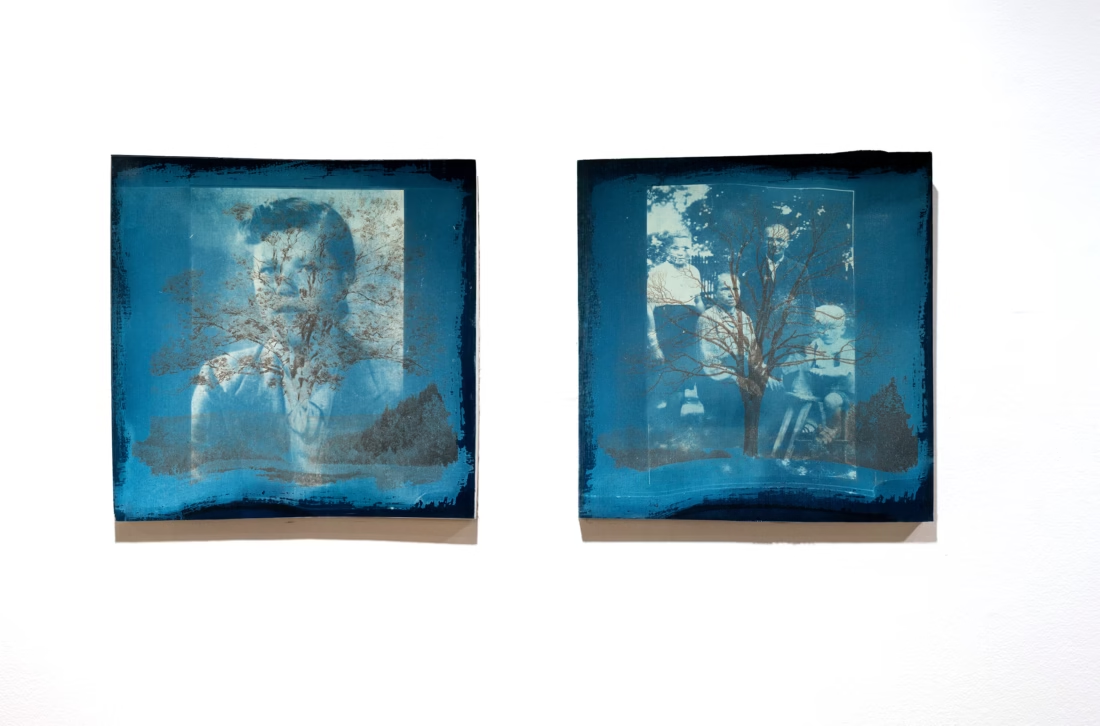
Working with textiles, archival photographs and objects connected to personal histories, I see cyanotype as a way of creating a physical connection between past and present.
A piece of fabric can hold memories of a person.
A plant can hold memories of a place.
An old photograph can hold memories of a moment that can never be repeated.
Through cyanotype, these traces can be transformed into new photographic artworks.
Why photographers should try cyanotype
For photographers used to digital cameras, cyanotype can feel unfamiliar at first — and that is exactly its strength.
It encourages experimentation and helps us rediscover the foundations of image-making:
- light
- composition
- contrast
- texture
- timing
- observation
Without the pressure of creating a “perfect” photograph, photographers can explore more intuitively.
Cyanotype can also expand an existing photographic practice. Digital images can be transformed into negatives and reinterpreted through this historic process, creating a dialogue between contemporary photography and early photographic techniques.
The result is a unique meeting point between technology and handcraft.
Experience cyanotype for yourself
My cyanotype workshops invite participants to step away from the speed of everyday life and experience photography in a more tactile and experimental way.
You will learn the foundations of the cyanotype process, experiment with different materials and create your own unique blue photographic prints using sunlight.
No previous photography or artistic experience is required — only curiosity and a willingness to explore.
Cyanotype is not just about making an image.
It is about experiencing the moment of making it.
And sometimes, the process itself becomes the most memorable part of the photograph.
Cyanotype Workshops at Montsalvat
Experience making images entirely by hand. Join one of my Montsalvat workshops.
View this post on Instagram