

Cyanotype: from scientific discovery to contemporary art
When we think about photography, we often imagine cameras, lenses and photographs captured in an instant.
But some of the most fascinating photographic processes began long before digital technology – when scientists and artists were experimenting with chemistry, light and the possibilities of creating images by hand.
Cyanotype is one of these remarkable processes.
Recognised by its distinctive Prussian blue colour, cyanotype has travelled an extraordinary journey over nearly two centuries. It began as a scientific tool, became one of the earliest forms of photographic publishing, transformed the world of architectural drawing and has now found a new life among contemporary artists exploring memory, nature and personal stories.
Understanding the history of cyanotype reveals why this process continues to inspire artists today.
The invention of cyanotype
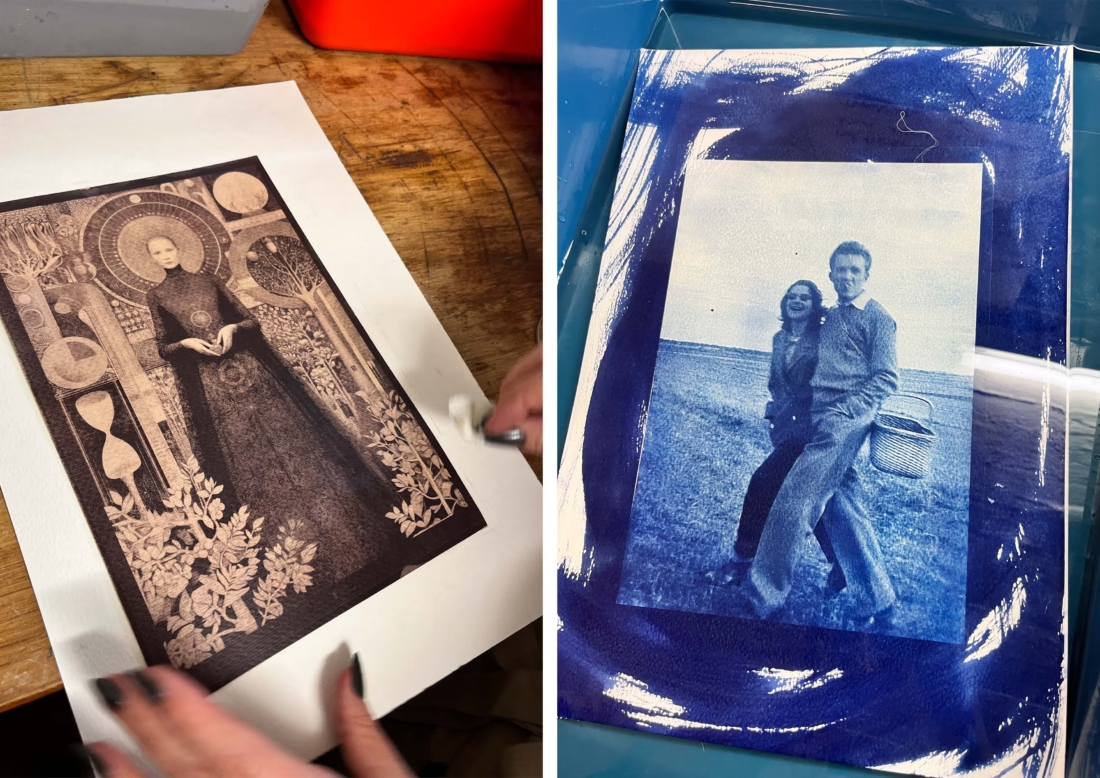
Cyanotype was invented in 1842 by English scientist and astronomer Sir John Herschel.
Herschel was interested in the chemistry of light and was exploring ways to create permanent photographic images. At the time, photography itself was still a relatively new invention, with early pioneers experimenting with different methods of recording images.
Herschel discovered that certain iron-based chemicals could be made light-sensitive and, when exposed to ultraviolet light, could produce a beautiful blue pigment.
The process was simple, stable and relatively inexpensive compared with other early photographic techniques.
Unlike some photographic methods that required complex equipment, cyanotype could be created using only a prepared surface, sunlight and water.
This accessibility helped it become an important tool for scientists, artists and documentarians.
Anna Atkins and the first photographic books
One of the most important figures in the history of cyanotype is British botanist and photographer Anna Atkins.
Atkins recognised the potential of cyanotype as a way to accurately document botanical specimens. Using the process, she created detailed images of algae, ferns and other plant specimens by placing them directly onto light-sensitive paper.
Her work resulted in what is considered one of the earliest examples of a photographically illustrated book:
“Photographs of British Algae: Cyanotype Impressions”, published from 1843 onwards.
Atkins’ images were not simply scientific records. They possessed an artistic quality that continues to inspire photographers today.
The delicate forms of plants, captured as white silhouettes against deep blue backgrounds, demonstrate the unique beauty of cyanotype – where scientific observation and artistic expression meet.
Her work also highlights something that remains central to cyanotype today: the relationship between photography and the natural world.
From art and science to everyday use: the blueprint
Although cyanotype began as a photographic process, its most widespread use came through architecture and engineering.
For more than a century, cyanotype was used to reproduce technical drawings and plans. The process became commonly known as the “blueprint” because architectural designs appeared as white lines against a blue background.
Before digital printing and photocopying became available, blueprints were an essential tool for architects, engineers and builders.
Millions of technical drawings were reproduced using cyanotype.
This practical application became so well known that many people encountered cyanotype without knowing its photographic origins.
The same process that created scientific documents and architectural plans was also being used by artists to create unique handmade images.
The revival of alternative photographic processes
With the arrival of digital photography, many historic photographic processes became less common.
However, rather than disappearing, techniques such as cyanotype began to experience a revival.
Artists started returning to analogue processes because they offered something digital photography could not replicate: physical connection.
In an age of instant images, cyanotype provides an opportunity to slow down and reconnect with the materials of photography.
The process involves paper, fabric, chemicals, sunlight and water. It leaves behind evidence of the artist’s hand and the conditions in which the artwork was created.
Each print becomes a record of a particular moment.
Cyanotype in contemporary art
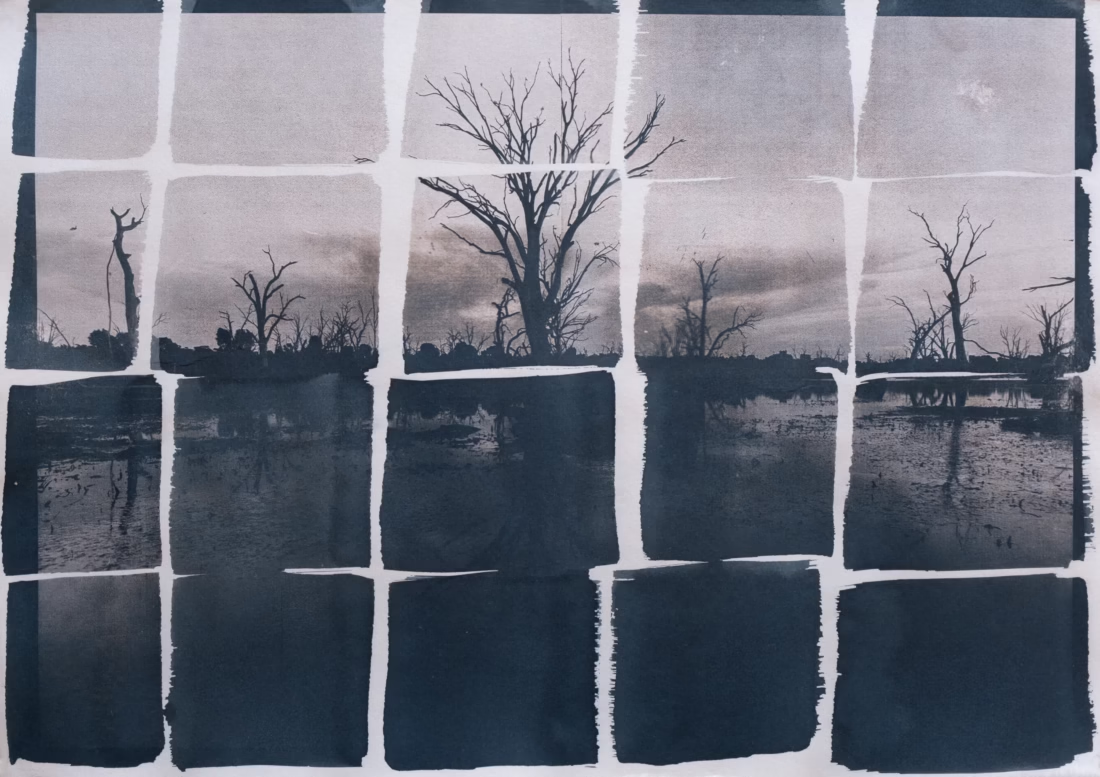
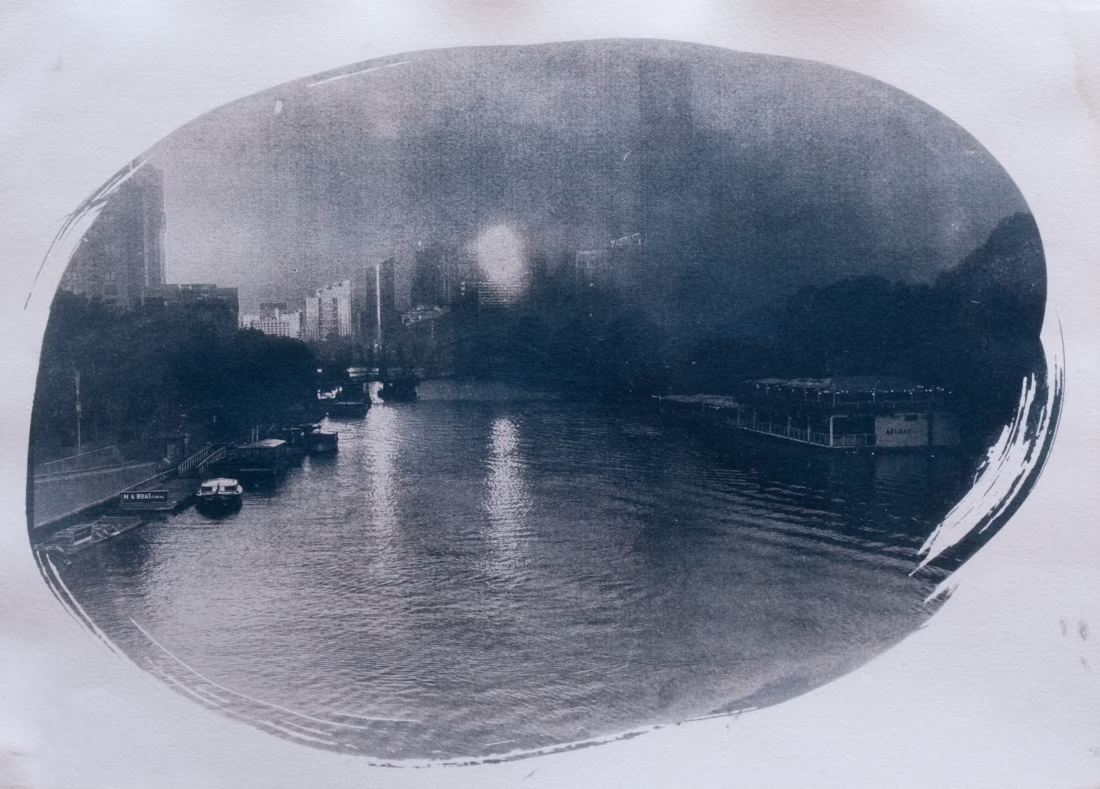
Today, cyanotype is used by artists across the world in photography, printmaking, textiles, installation and mixed media.
Contemporary artists are drawn to the process because it sits between disciplines. It is photography, but it also feels like drawing. It is scientific, but also intuitive. It is historical, yet completely relevant to contemporary conversations about memory, environment and identity.
Artists use cyanotype to explore themes including:
- the relationship between humans and nature
- climate change and environmental loss
- family archives and personal histories
- migration and belonging
- the body and identity
- time, memory and transformation
The blue colour itself carries emotional associations. It can suggest water, distance, nostalgia, dreams and the passage of time.
For many artists, cyanotype is more than a technique – it becomes a language of expression.
Why cyanotype connects so strongly with memory
There is something inherently archival about cyanotype.
The process creates a physical trace. An object touches the surface and leaves behind its impression. A photograph is transformed into something handmade. A plant collected from a meaningful place becomes preserved in a new form.
This connection between object, image and memory is one of the reasons cyanotype continues to resonate.
In my own practice, I am interested in how photographs can hold stories of people, places and experiences. Cyanotype offers a beautiful way of thinking about memory because it is not about perfect reproduction.
Instead, it is about traces.
The faded edges.
The textures.
The marks left behind.
The evidence that something – or someone – was once there.
Experiencing cyanotype today
Although cyanotype has a long and fascinating history, it remains wonderfully accessible.
Anyone can experience the magic of watching sunlight create an image.
A simple leaf, a treasured object or a personal photograph can become the beginning of a handmade artwork.
This connection between past and present is what makes cyanotype so special. A process invented almost two hundred years ago continues to inspire new generations of artists and makers.
Read more about my studio practice →
Join a cyanotype workshop in Melbourne
My cyanotype workshops introduce participants to this historic photographic process through hands-on experimentation.
You will learn about the history and chemistry of cyanotype, create your own compositions and experience the moment when sunlight transforms simple materials into unique blue photographic artworks.
No previous photography or art experience is required.
Whether you are interested in photography, history, nature, textiles or simply trying a new creative process, cyanotype offers a rare opportunity to connect with a photographic tradition that has survived – and continues to evolve – for almost two centuries.
A cyanotype is not only an image.
It is a conversation between light, time, material and memory.