

Description
Wimmera Nights
Photographic series, 2016
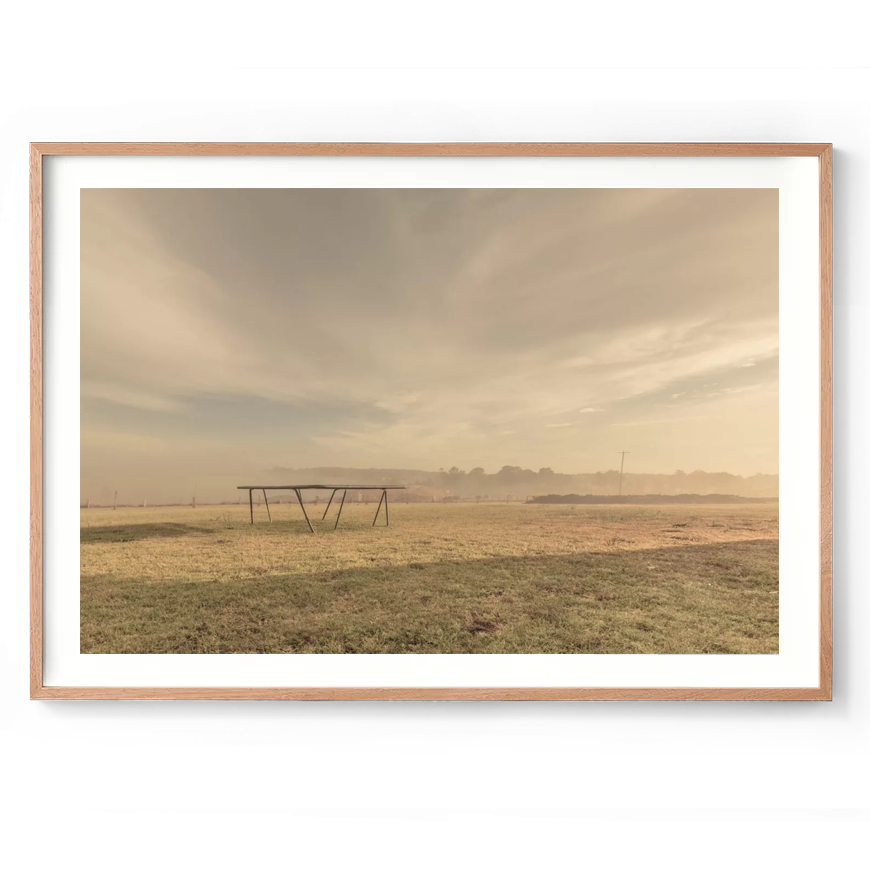
In 2016, a chance encounter with Lake Hindmarsh, Victoria’s largest freshwater lake, became a four-day photographic journey through the Wimmera. Until then, the lake had been little more than a blue shape on a map.
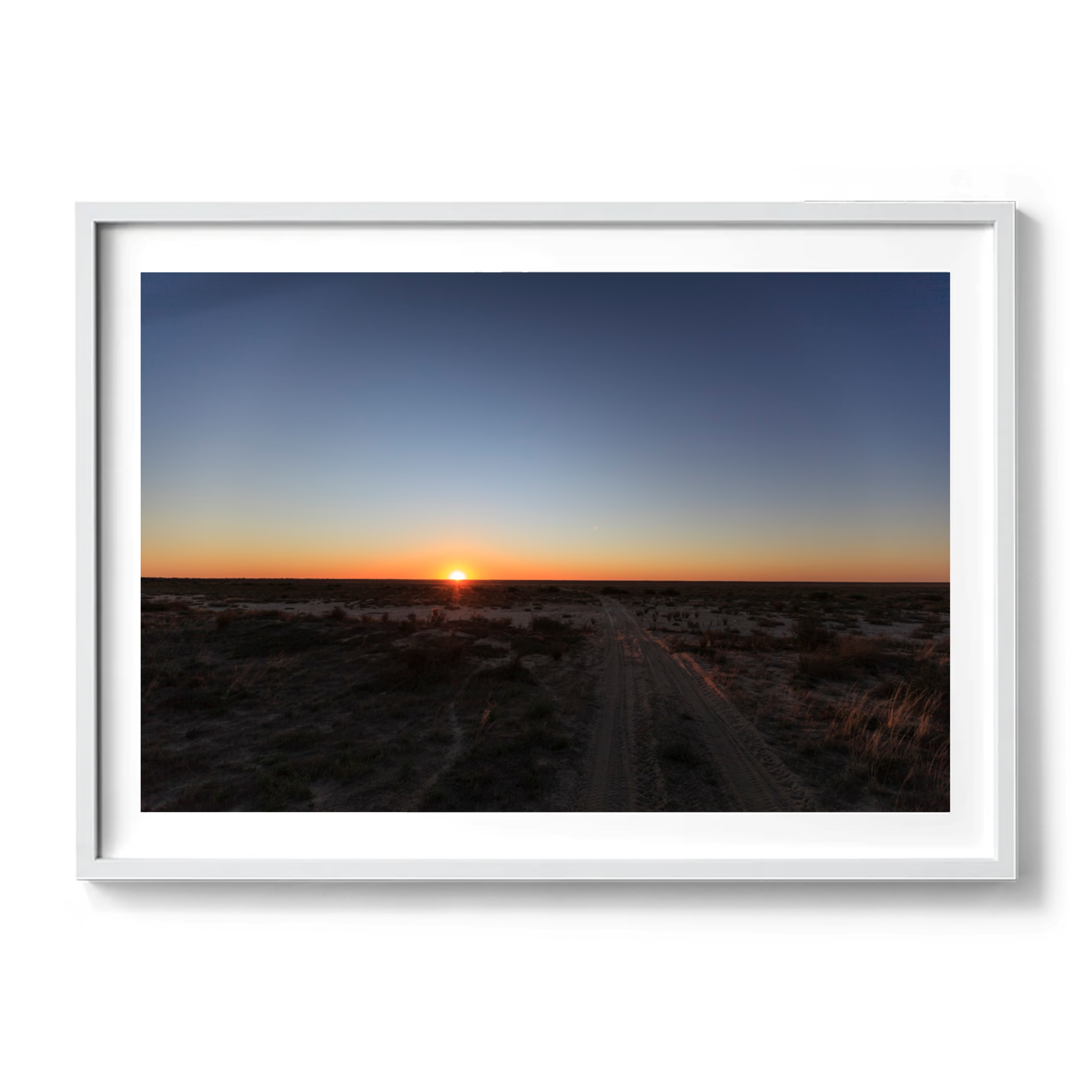
Years of drought had taken their toll on Lake Hindmarsh, although regional flooding in early 2011 had briefly brought it back to life. At Easter in 2016, with a kayak strapped to the roof of our car, we set off from East Gippsland, hoping to explore its waters and surrounding landscape. After a long day on the road, we approached the lake, expecting the usual Easter holiday crowds. Instead, we encountered an extraordinary emptiness. Not a car, not a person in sight. It slowly dawned on us that we were driving across the dried-out lakebed itself.
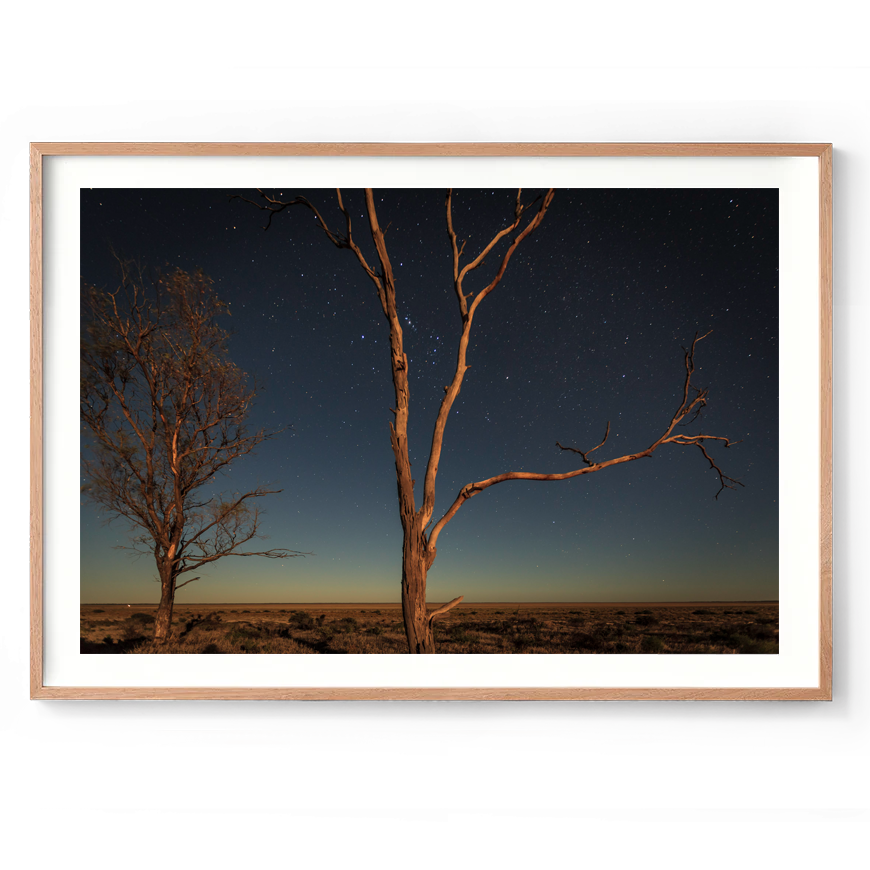
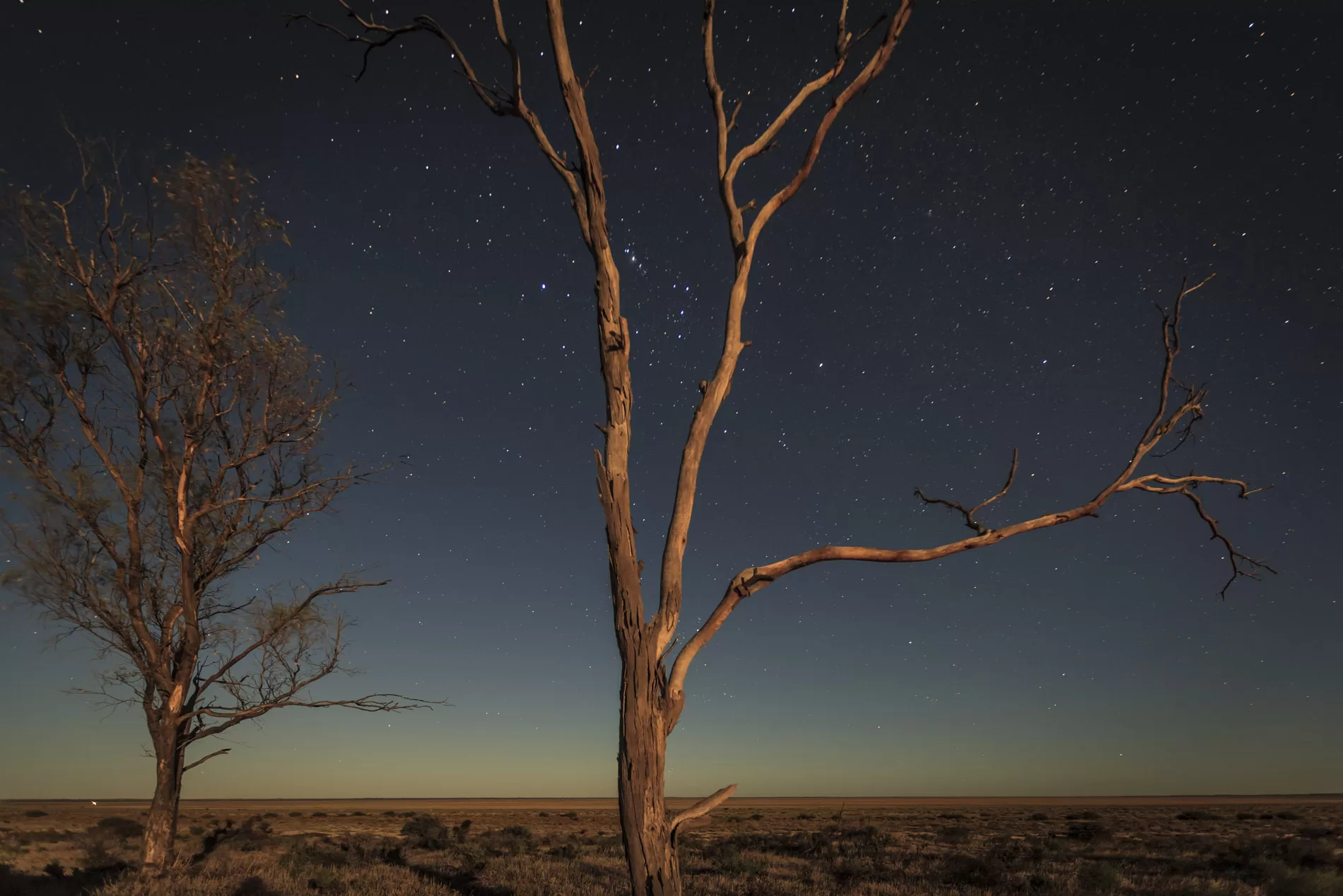
Over the following days and nights, I photographed this stark, seemingly deserted landscape at twilight and after dark. Long-dead trees emerged from the darkness, illuminated by the warm glow of firelight and passing beams of torchlight. Beneath the vast, star-filled sky, the lakebed became an almost otherworldly place, suspended somewhere between presence and absence.
In that profound stillness, I found myself returning to my childhood in rural Poland, where I had experienced a similar connection to the land. Despite the distance between these two places, the solitude, darkness and openness of the Wimmera felt very familiar.
Wimmera Nights reflects on the fragile and ever-changing relationship between land, water and memory, and spirituality. At Lake Hindmarsh, the boundary between land and water is as elusive as the passage of time itself. What was once an aquatic paradise can become an arid expanse, only to be transformed again by rain.
The series captures this fleeting beauty of the natural world, and with it, a quiet reminder of our own transience.